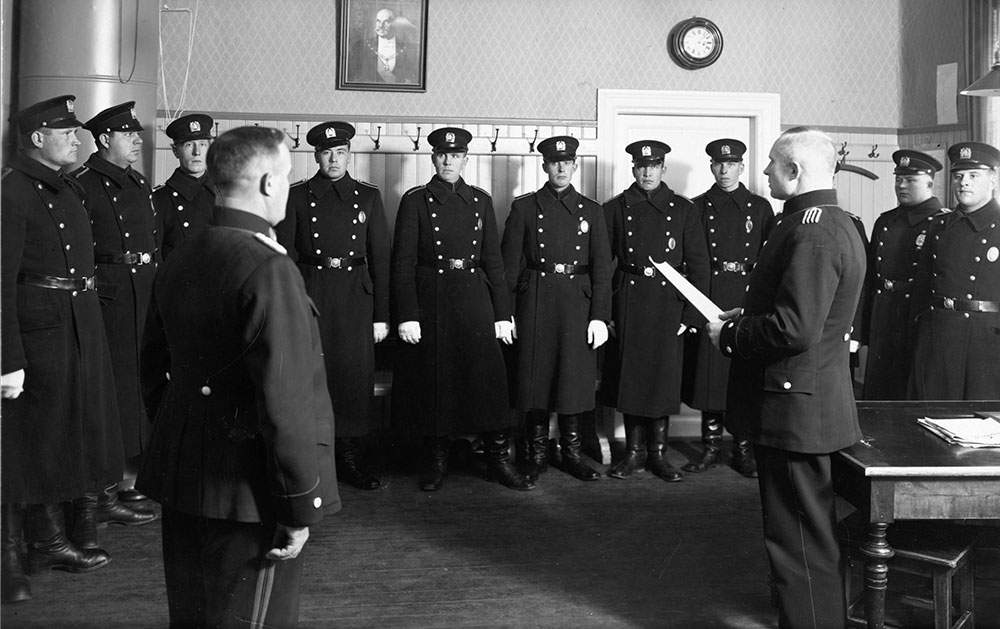
The 1930s
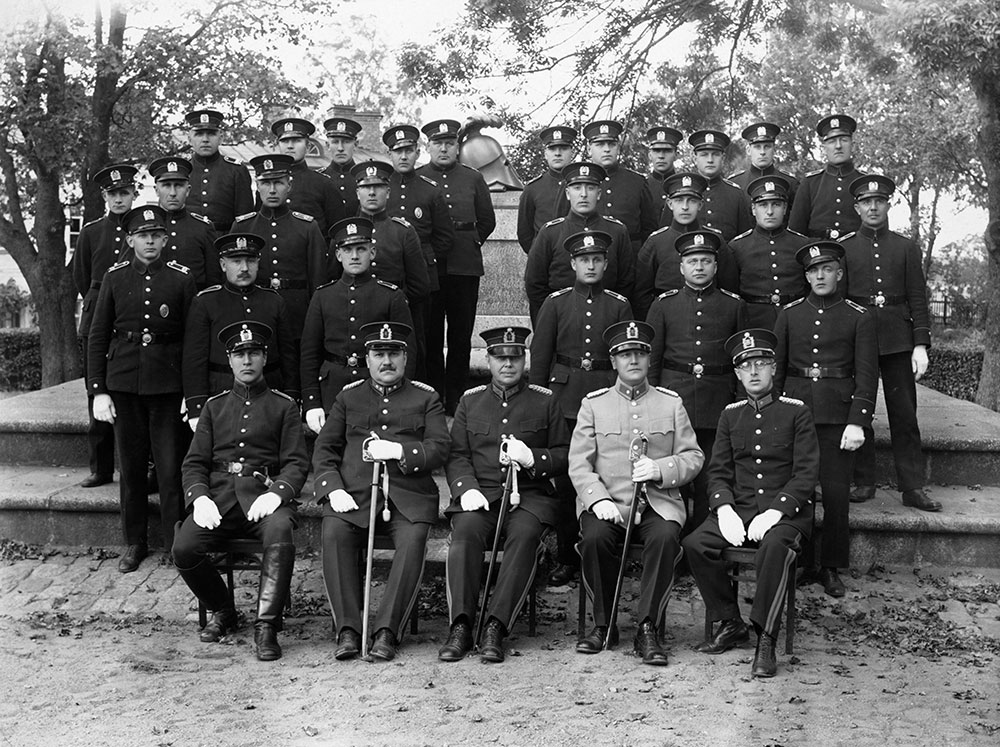
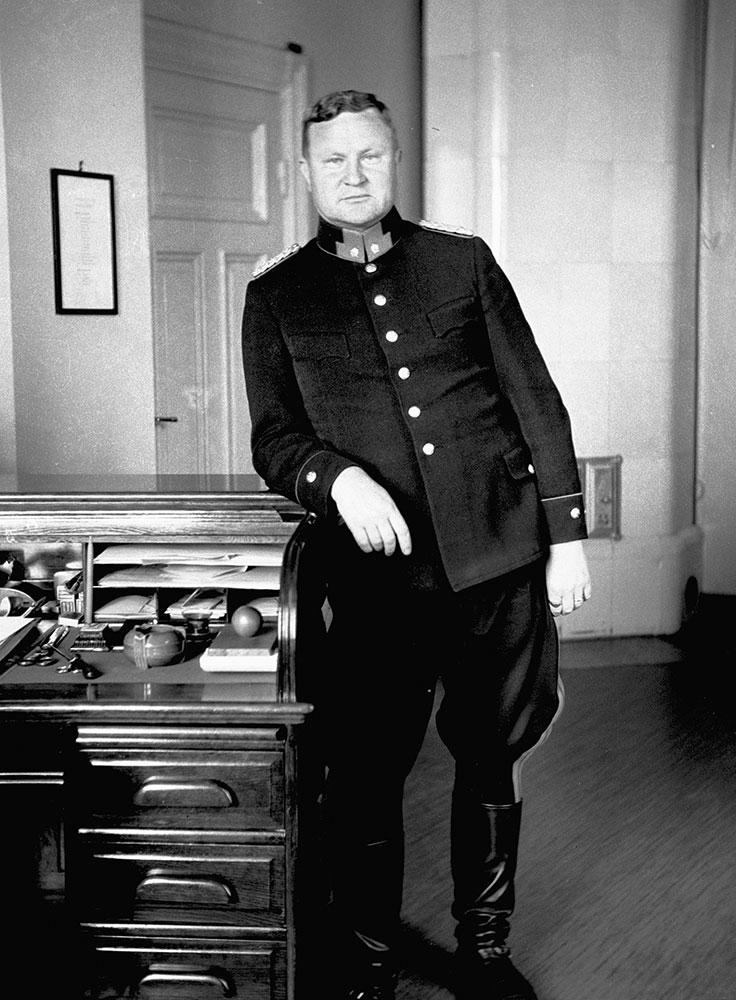
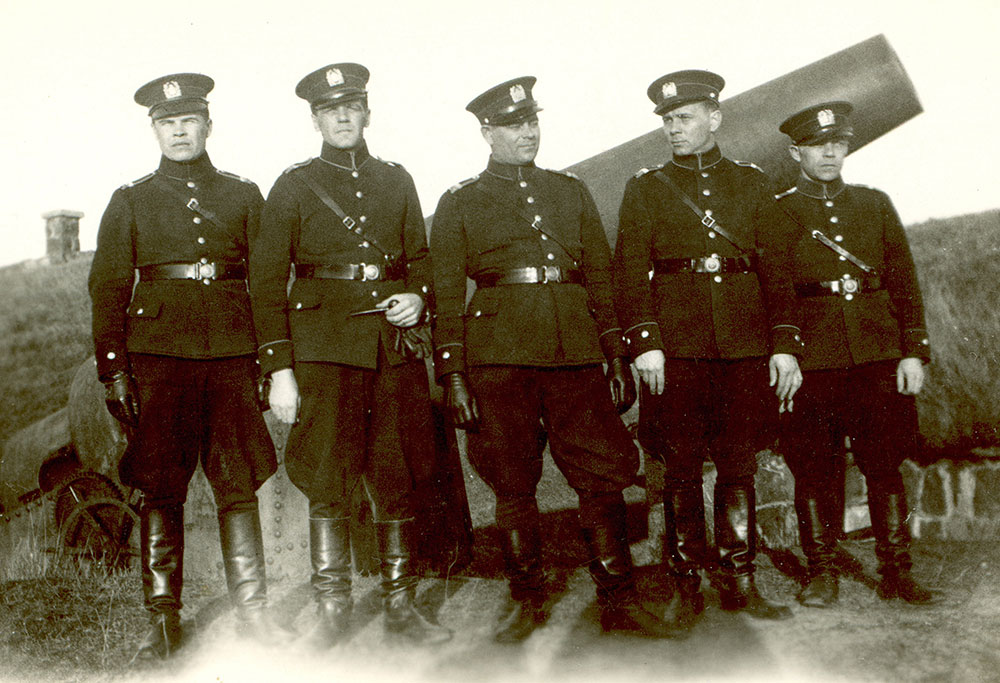
The uniform statute of 1929 entered into force at the beginning of 1930. The new uniform was not much different from that of 1923, but had been somewhat modified to become more practical. The measures of the coat had been changed, and breast pockets had been added to the coats of commanding officers. Mounted officers and those driving motor vehicles were given a shorter coat that was more suitable for their work.
Among the details changed were also the rank insignia. Constables were divided into junior and senior constables, and the shoulder straps of senior constables were given a silver-coloured cord. The metal provincial coat of arms present on the cap of commanding officers was given a coloured enamel layer whereas that of constables remained silver-coloured.
The next uniform statute was enacted already in 1935, but like that of 1929, it did not introduce any major changes to the uniform. The tight-fitting coat of 1923 remained in use, but the summer coat was modified by removing the seam cords from the collar and cuffs and changing the measures of the collar. The rank insignia system of commanding officers was, however, completely changed. The insignia were still based on heraldic roses and lions on the collar, but the shape of the collar straps was changed along with the number of roses. The bottom colour of the collar straps indicated from which part of the police organisation the officer was: countryside sheriffs and commanding officers of police departments wore blue collar straps, those of the Police Department of the Ministry of the Interior wore purple ones, and those of the State Police School wore green ones.
Lower-ranking officers had no collar straps of their own, but sergeants wore two light blue cords on their collar. Constables wore no insignia on their collars, only a numbered badge on their coat. In 1938, the badge saw a significant change as the new emblem of the Finnish police, a sword with the head of the lion from the coat of arms of Finland as a handle, was added to it. The coat of arms of the officer’s province was present at the middle of the sword, and when the Mobile Police Detachment was established as a national unit in 1930, the sword on its badge came, accordingly, with the coat of arms of Finland.
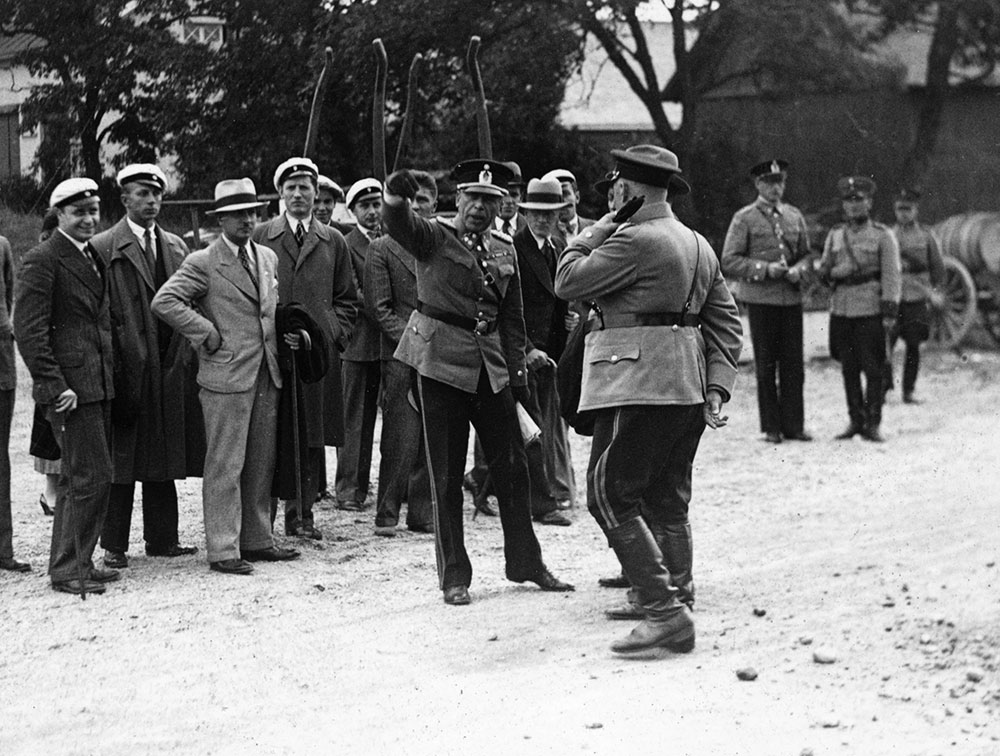
In late 1935, the Ministry of the Interior issued a circular with more detailed instructions on how the uniform should be worn. The uniform was divided into four sets: the basic set, the duty set, the visit set and the set for festive occasions. These were not separate uniforms, however, as only some items were switched depending on the occasion. The items and decorations that were to be carried on various occasions were clearly defined, and there were also instructions on proper conduct. The police organisation was keenly aware of the significance of the uniform for the public image and social status of the police force, and the uniform culture of the police was being actively developed based on these insights. At the same time, the uniform of the police became more military in style.