Skip to content
Back
Uniform coats Trousers, footwear and belts Overcoats Hats and caps Female police officers Shirts and sweaters Coveralls and riding suits Rainwear and reflective vests
From Breeches to Coveralls - The History of Finnish Police Uniforms
Introduction
  • The significance of the police uniform and its various changes over the centuries
  • Finnish law enforcement uniforms prior to 1861
History of the uniform
  • From 1861 to the turn of the 20th century
  • 1900 - 1917
  • 1918 - 1930
  • The 1930s
  • The 1940s
  • 1951 - 1970
  • The 1970s
  • The 1980s
  • The 1990s
  • The 21st century
Uniforms
  • Uniform coats
  • Trousers, footwear and belts
  • Overcoats
  • Hats and caps
  • Female police officers
  • Shirts and sweaters
  • Coveralls and riding suits
  • Rainwear and reflective vests
Not like this!
  • NOT LIKE THIS!
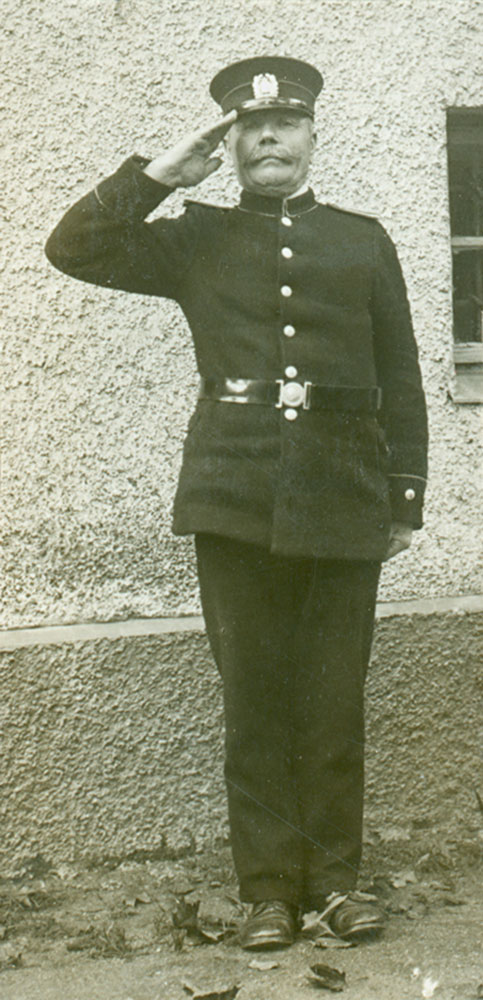
In police uniform statutes, the word "belt" usually means a belt worn on top of the uniform coat or overcoat. Belts worn in order to keep the trousers from falling were, of course, underneath the coat and not visible to the public, making them less important to be included in the statutes. The first time such belts were specified was in the uniform statute of 1983. Constable "Setä" Aaltonen of Turku, 1920s.
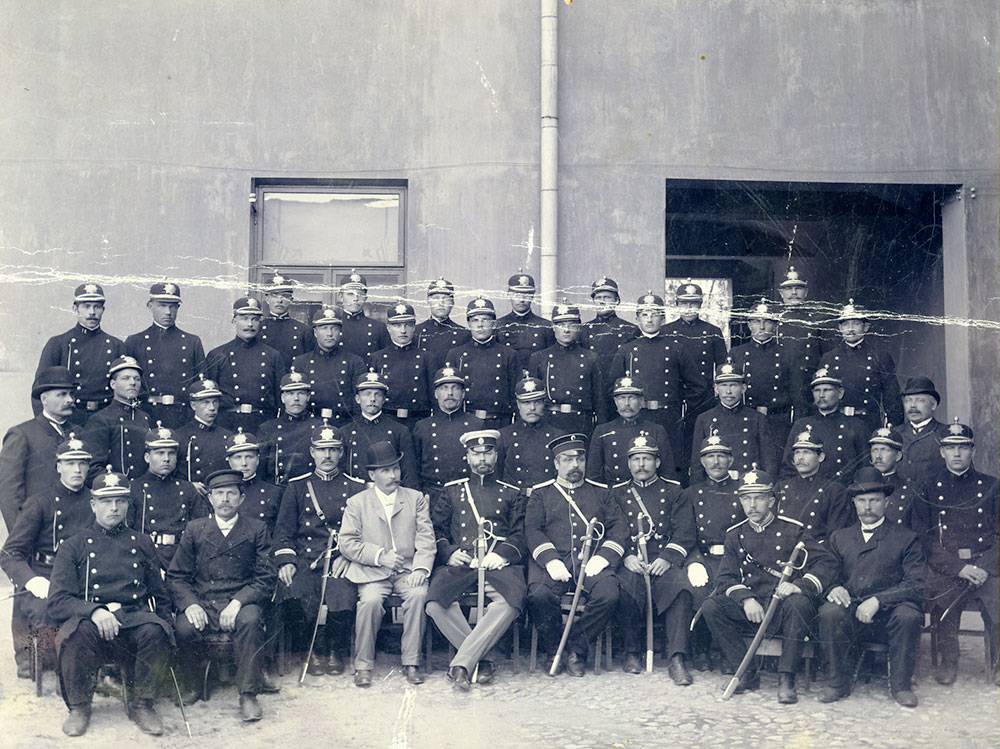
The cut of the trousers worn by the police in the early 20th century was not clearly defined in the uniform statutes, their colour being of greater importance. The colour varied according to the most recent uniform statute and the rank of the officer, and it must be noted that the trousers were not always of the same colour as the coat. The belt could be made of fabric or leather of the same colour as the uniform. The sword was usually fastened on a leather strap hanging from the shoulder. Policemen in Oulu in 1908 wearing uniform m1906. Photographer: F. Suomela.
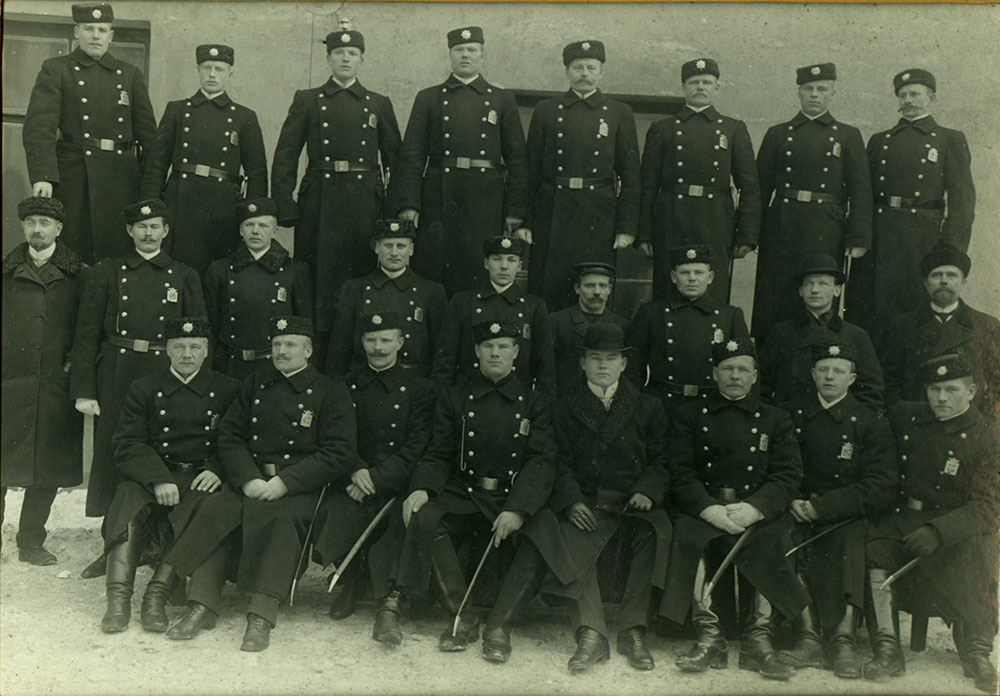
The official police footwear of the early 20th century was a pair of black knee-high leather boots. Photographs from the era show that other kinds of footwear were also used. Officers of Kallio Precinct, Helsinki Police Department, around 1910.
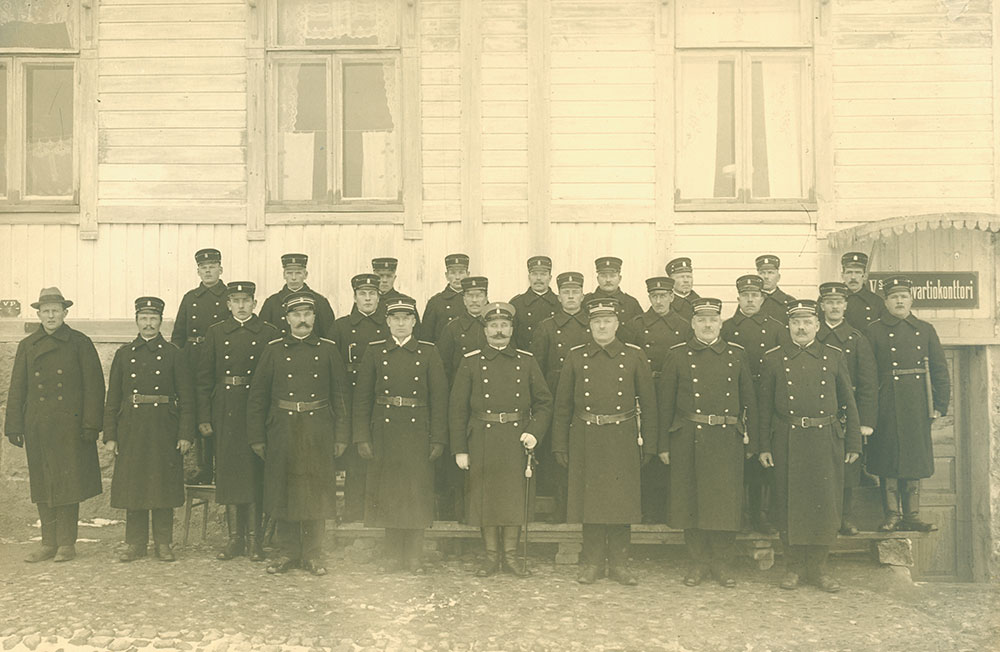
The trousers of the first police uniform after Finnish independence were made of the same kind of bluish grey baize as the coat. The black leather boots remained the official footwear. The belt was not separately mentioned in the uniform statute, but photographs reveal that ordinary leather belts with varying measurements were used. Officers of Precinct 5 of the Turku Police Department in the winter of 1921.
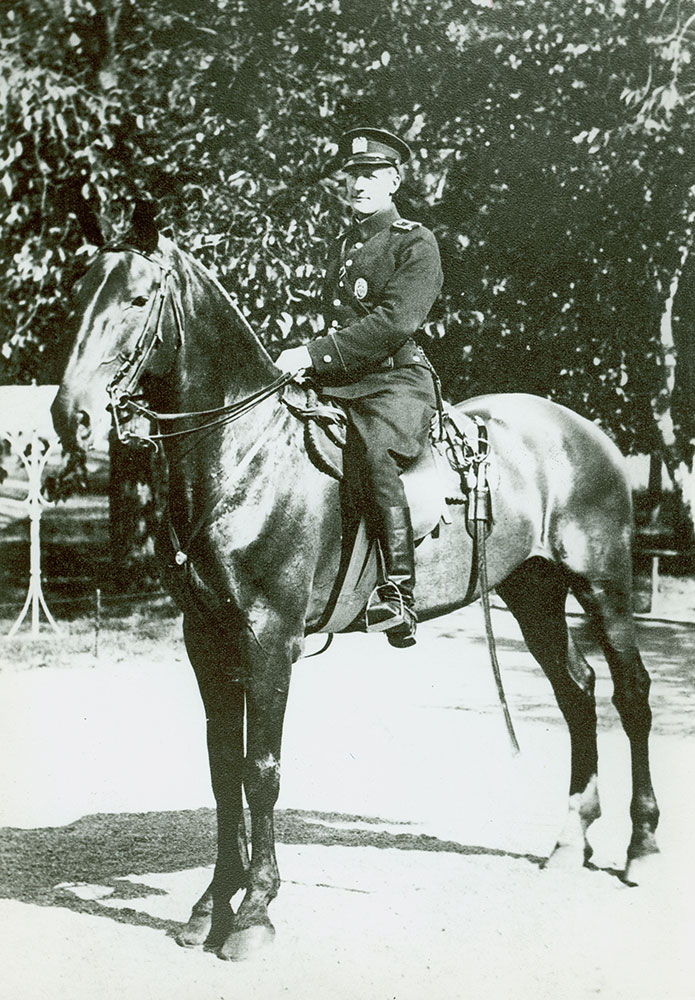
The uniform statute of 1918 was the first one to mention riding breeches. However, mounted constables had been strengthening their trousers with leather already at the beginning of the century. Mounted constable in Turku wearing the uniform of 1929.
1 / 23