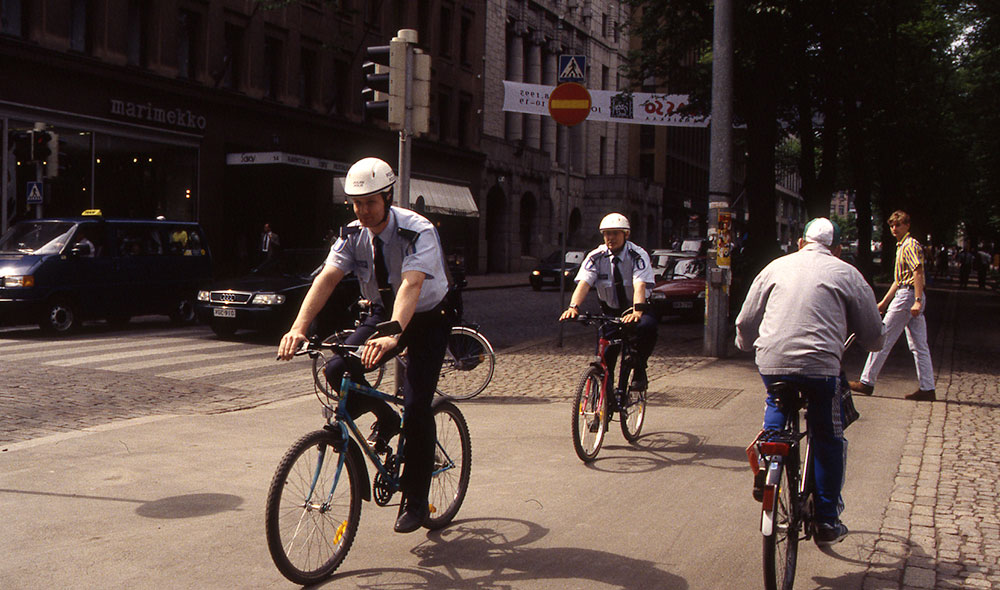
The 1990s
The development of the police uniform continued in the early 1990s. New uniform items were tested in various parts of the country, and a renewal of items already in use was being prepared. The police depots were merged in 1992, and the selling of uniforms, which had been the task of what had been the Police Equipment Depot, was transferred to the State Uniform Factory. The new Police Depot, which was renamed the Police Technical Centre in 1996, continued developing the uniform.
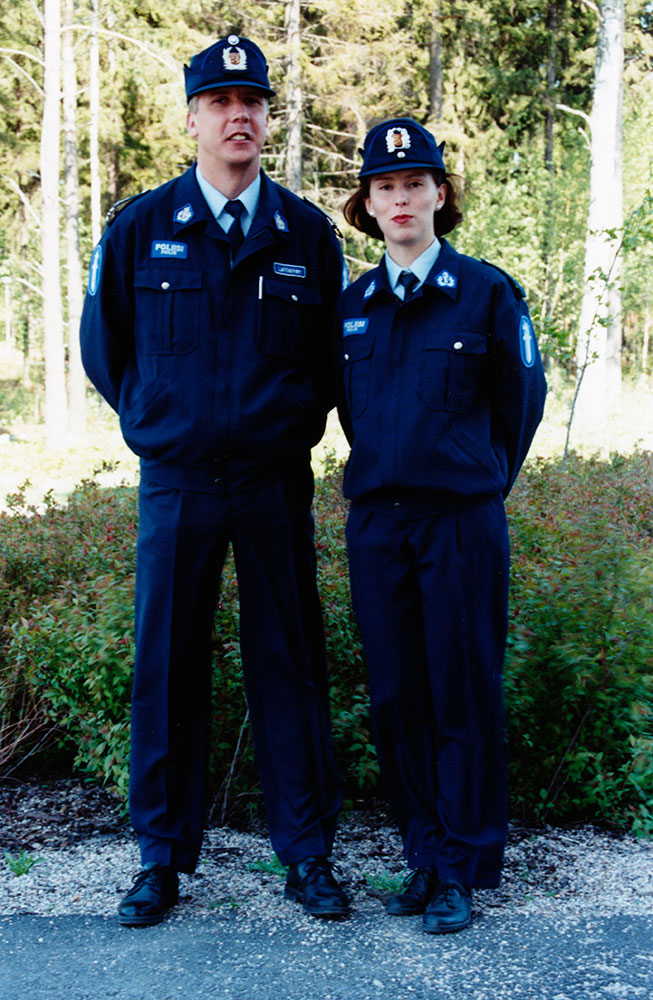
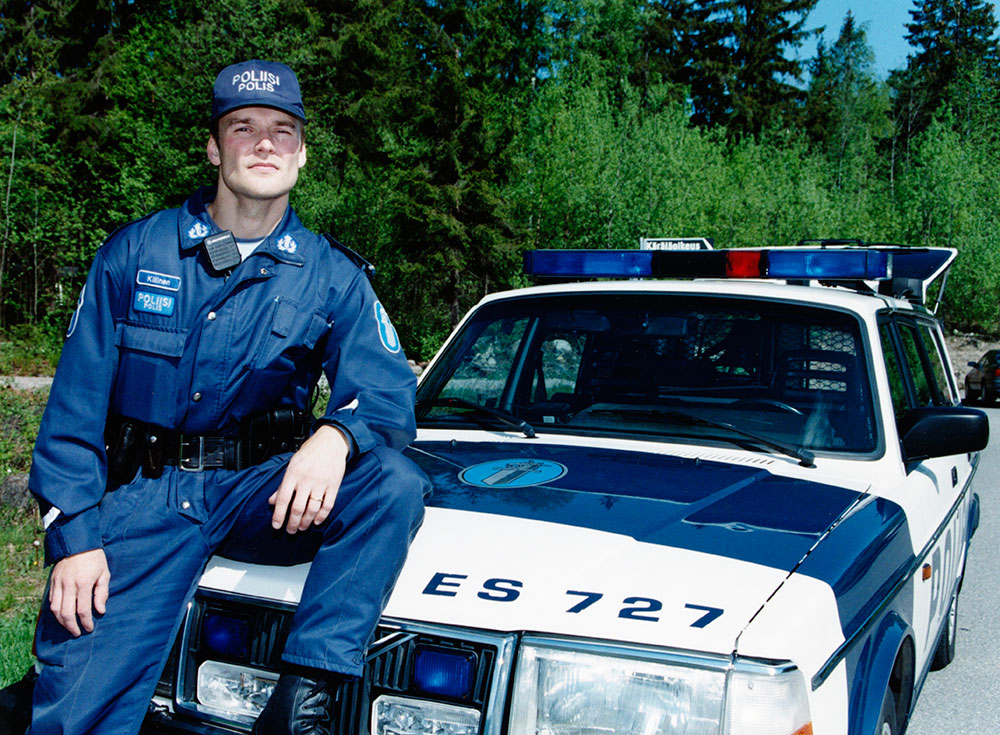
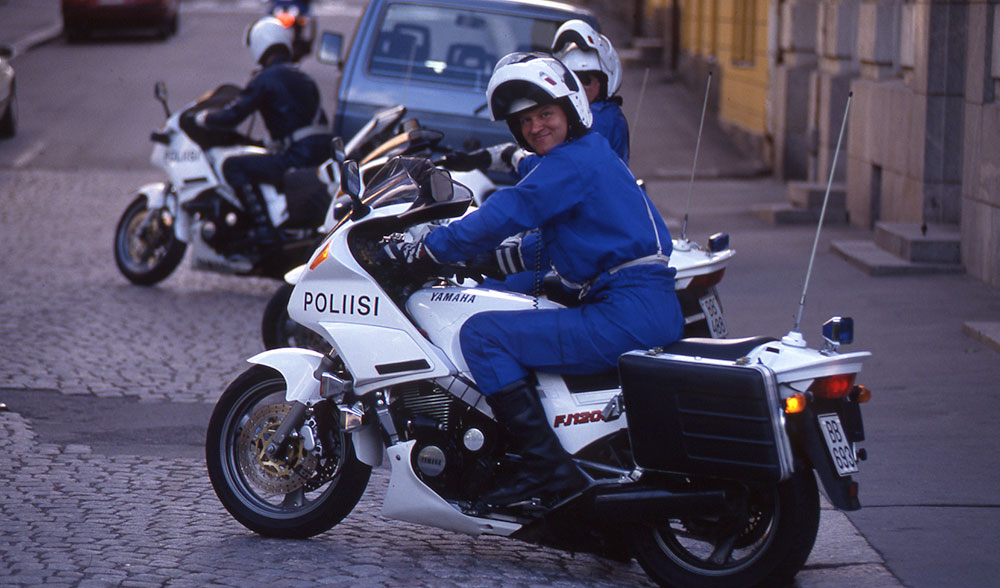
A new decision on the uniform was enacted in 1993 based on the work of the Uniform Committee and the tests carried out. The field jacket was lengthened, and its buttons were replaced with a zipper. The special suit was replaced with coveralls that were more loose-fitting, and the details of the coveralls were more clearly defined than earlier. Entirely new items included a knit sweater, protective trousers, and a reflective safety vest. Female officers were given culottes and a dark blue vest. A light cap that resembled a regular baseball cap was introduced as an alternative to the field cap.
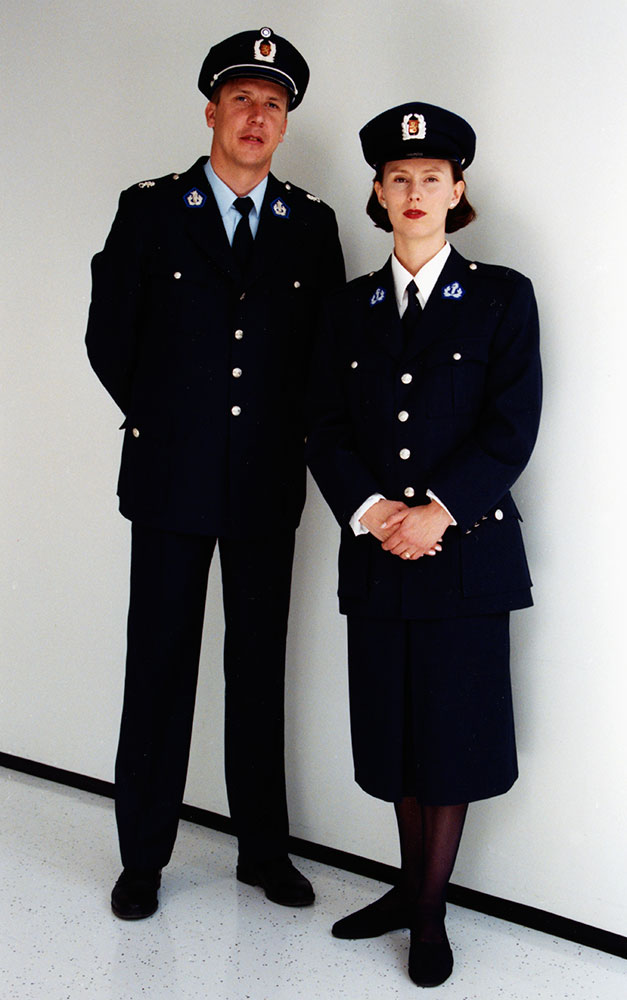
The decision of 1993 was overturned when the Ministry of the Interior issued a new uniform decree along with a new set of uniform regulations in 1995. These documents did not, however, introduce any significant changes. The uniform was divided into four sets, the field set, the duty set, the visit set and the parade set, and which items could be combined was defined in the regulations. The field set was the most commonly used attire for both outdoor and indoor work.
Development of the field uniform began in the autumn of 1995. The goal was to create police coveralls for everyday work based on the earlier coveralls for special situations. A clothes designer was hired for the task, and designing and testing were begun both for coveralls and a two-piece field suit. The contract with the State Uniform Factory was ended in late 1997, and after this, a project for wholesale renewal of the police uniform, VIVA99, was begun.
During VIVA99, all aspects of the police uniform were thoroughly investigated. Both the materials and individual uniform items were tested in laboratories and the field. The items were given technical specifications, and their production was put to tender in accordance with EU legislation. The goal was to create a police wardrobe that combined comfort, safety and a high quality-price ratio.
The new wardrobe was completed in 1998. It was diverse and professionally designed, including clothes for numerous situations and user groups. The Police Technical Centre was in charge of selling the uniforms, and distribution of the new items began in early 1999. In May that year, the Ministry of the Interior issued a decision permitting the use of old uniform items until the end of the year. The distribution of some items began only at the beginning of the new millennium.