Skip to content
Back
Uniform coats Trousers, footwear and belts Overcoats Hats and caps Female police officers Shirts and sweaters Coveralls and riding suits Rainwear and reflective vests
From Breeches to Coveralls - The History of Finnish Police Uniforms
Introduction
  • The significance of the police uniform and its various changes over the centuries
  • Finnish law enforcement uniforms prior to 1861
History of the uniform
  • From 1861 to the turn of the 20th century
  • 1900 - 1917
  • 1918 - 1930
  • The 1930s
  • The 1940s
  • 1951 - 1970
  • The 1970s
  • The 1980s
  • The 1990s
  • The 21st century
Uniforms
  • Uniform coats
  • Trousers, footwear and belts
  • Overcoats
  • Hats and caps
  • Female police officers
  • Shirts and sweaters
  • Coveralls and riding suits
  • Rainwear and reflective vests
Not like this!
  • NOT LIKE THIS!
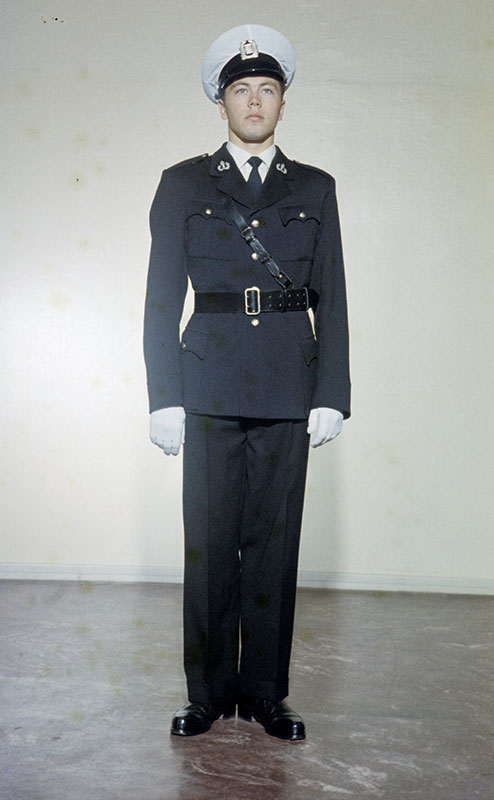
The uniform of 1951 was the first one with an open collar, which meant that the colour and style of the shirt worn under it had to be regulated as well. According to uniform statute 393/1952, the shirt was to be either steel grey or white and was to have a semi-stiff foldable double collar.
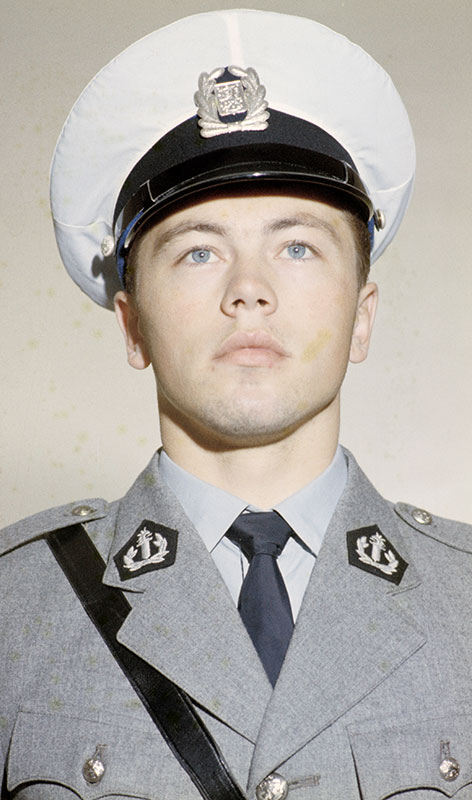
A steel grey or white collared shirt was worn under the grey summer coat of 1953.
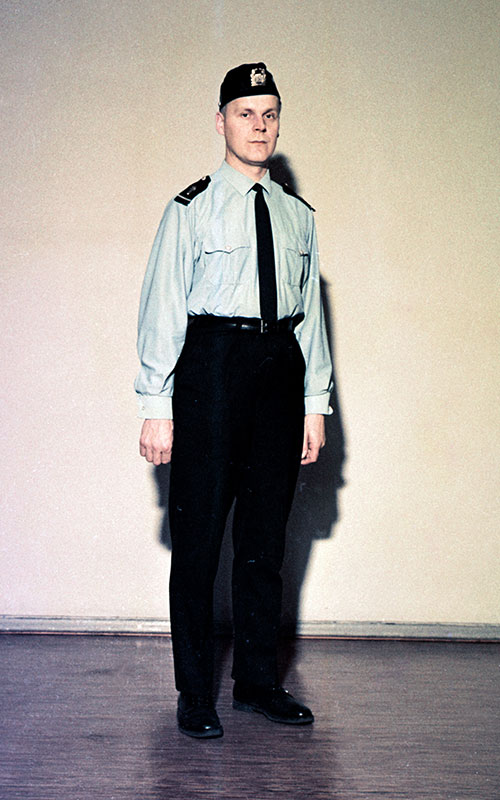
From 1958 onward, officers were permitted to wear a light grey collared shirt as an alternative to the summer coat. Rank insignia were fastened on dark blue removable shoulder straps. A senior constable.
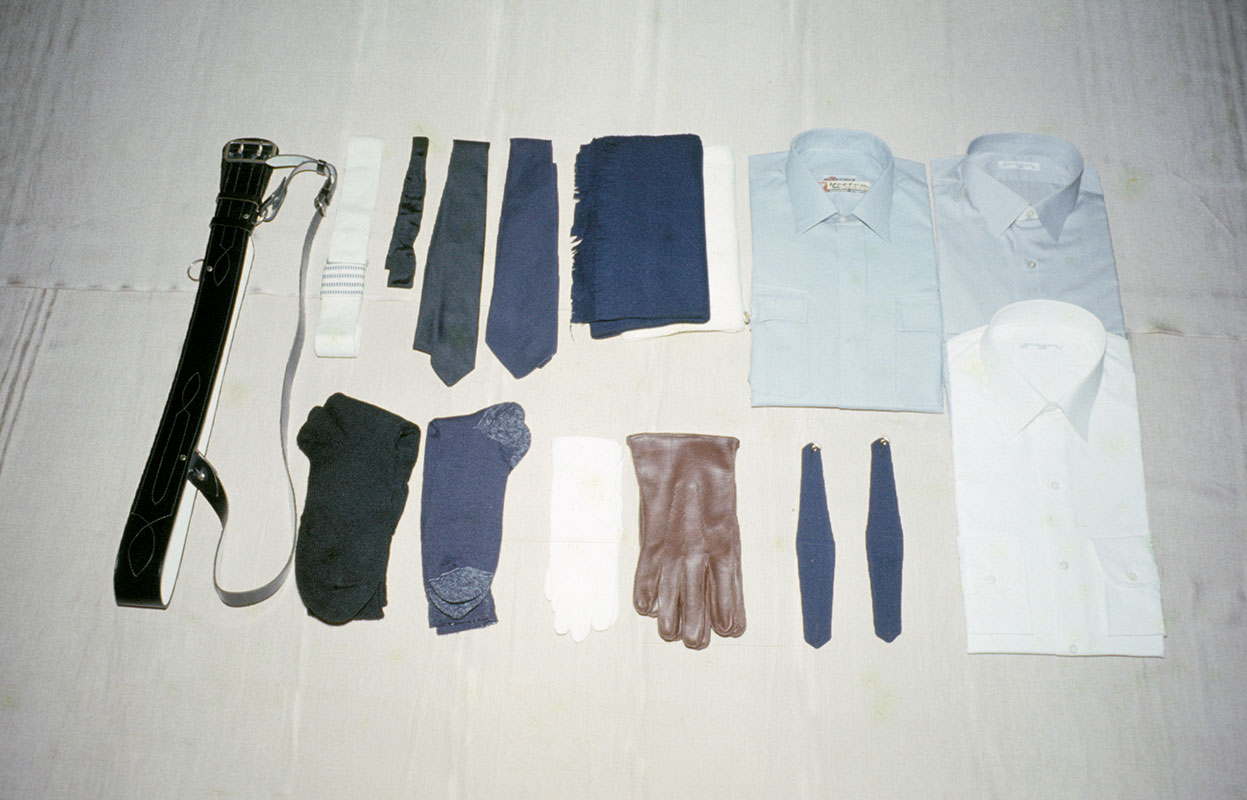
Uniform items from the 1950s and 1960s. Shirts came in two colours, and so did the ties: a dark blue tie for the grey shirt and a black tie for the white one. On festive occasions, it was permitted to substitute a black bow tie for the everyday tie.
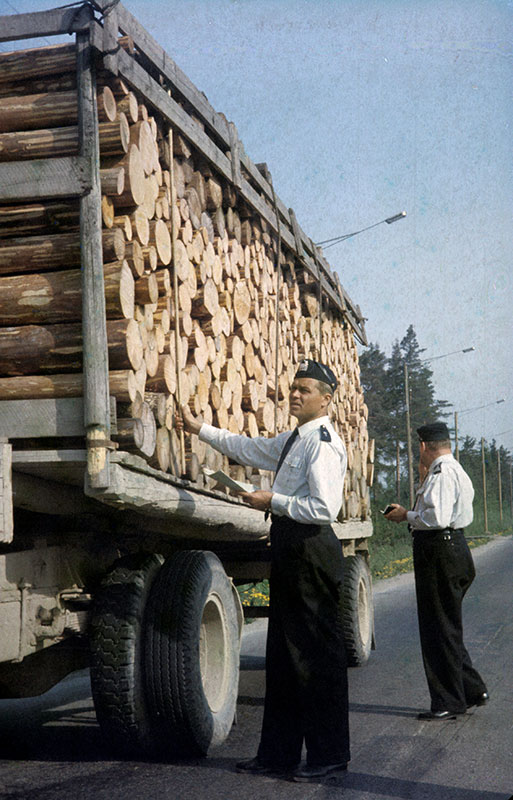
While out on traffic duty on a hot day, officers were allowed to take off their uniform coat. The white shirt would not be replaced with anything lighter, however. Officers of the National Traffic Police inspecting a timber truck in the 1960s.
1 / 16